Every modern vehicle contains between 15 and 18 kilos of adhesive, distributed across more than a thousand bonding points. What was once a secondary process, used for trim and sealing, is today a structural technology: adhesives hold together body panels, battery packs and electric motors, and they do it in places where welding is simply not an option.
This article explains which adhesives the automotive industry uses, why bonding has displaced welding and riveting in so many applications, and what it takes to run a gluing process reliably on a production line.
Why the automotive industry bonds instead of welding
A spot weld concentrates all the load on a single point. An adhesive joint distributes it across the entire bonded surface, which increases the stiffness of the assembly and improves its behaviour under fatigue and vibration.
But the decisive reason is materials. Lightweighting has filled vehicles with aluminium, high-strength steels, composites and technical polymers, and these cannot be welded to each other. An automotive bonding adhesive joins dissimilar materials without melting them, and at the same time insulates the interface, preventing the galvanic corrosion that appears wherever aluminium meets steel.
There is a third advantage that matters on thin sheet metal: bonding adds no heat. There is no thermal distortion, no discolouration and no loss of mechanical properties in the surrounding material.
Which adhesives are used in the automotive industry
Structural epoxies. The highest mechanical strength and rigidity. Used in body-in-white bonding, hem flanges and battery pack structures. They usually cure with heat, often in the paint oven, which integrates the cure into an existing step of the process.
Polyurethanes. Elastic and highly resistant to weathering. The classic application is direct glazing, bonding the windscreen to the body, where the joint has to absorb movement and contribute to the structural rigidity of the passenger compartment.
Methacrylates and acrylics. Fast curing and tolerant of poorly prepared surfaces. Common where cycle time is critical or where degreasing the substrate is not practical.
Silicones and MS polymers. Elasticity and thermal resistance, mainly for sealing and for joints subject to significant thermal expansion.
Hot melts. Solidify on cooling, with almost immediate handling strength. Used in interior assembly, headliners and trim.
Anaerobic adhesives. Cure in the absence of oxygen and in contact with metal. Thread locking and retaining bearings, magnets and shafts, a growing application in electric motor assembly.
Where adhesives are applied in a vehicle
Bonding is no longer concentrated in one area of the vehicle. It appears in the body, in hem flange joints and roof and floor reinforcements. In glazing, bonding windscreens, rear windows and panoramic roofs. In the electric powertrain, bonding and thermally coupling cells and modules inside the battery pack, and retaining magnets in motors. In brakes, bonding friction material to the pad backing plate. And throughout the interior, in headliners, panels and trim.
The battery pack is where demand has grown fastest. Bonding there is not only structural: it also has to conduct heat towards the cooling plate, insulate electrically and, in some designs, allow the pack to be opened again for repair.
The gluing process step by step
Surface preparation. This is where most bonding failures originate. The substrate has to be free of oils, release agents and dust, and in low-energy plastics it needs activation by flame, plasma or primer. A perfect adhesive on a contaminated surface produces a joint that holds during assembly and fails in service.
Dosing. The adhesive is conditioned to a controlled temperature so that its viscosity stays constant, and it is dosed by volume, not by time. In two-component systems the mixing ratio has to be verified continuously, because an incorrect ratio produces a bead that looks perfect and never reaches its specified strength.
Application. A robot applies the bead following a programmed path, keeping speed and distance to the part constant. Any variation in speed changes the amount of adhesive deposited at that point.
Assembly and curing. The parts are joined within the open time of the adhesive and held in position by tooling until the joint develops handling strength. Curing may be at room temperature, accelerated by heat or triggered by UV, depending on the chemistry.
Why the gluing process needs automation
The critical characteristic of a bonded joint is that it cannot be inspected once it is closed. A weld can be sectioned and examined. A bond is hidden between two parts, and its strength depends on variables that left no visible trace: whether the surface was clean, whether the mixing ratio was right, whether the adhesive was within its open time.
That is why gluing technology in automotive is built around controlling the process rather than inspecting the result. Servo-driven dosing systems that measure the volume actually delivered. Temperature-conditioned adhesive lines. Vision or laser profilometry systems that verify bead position, width and continuity before the parts are closed. Purge cycles that prevent material curing inside the nozzle during stoppages. And unit-level traceability recording, for every part, which adhesive batch was used and under what parameters.
How the quality of a bonded joint is verified
Production control combines in-line inspection of the bead with periodic destructive testing on samples. The bead is checked geometrically: correct path, continuous, with the specified width and no interruptions. The joint is validated on test benches, by pull, shear or peel testing, and in sealing applications by leak testing.
To this is added a discipline that is easy to underestimate: monitoring the environment. Temperature and relative humidity affect the cure of many chemistries, so a line that works in winter can produce out-of-specification joints in summer if nobody is measuring.
Engineering behind a reliable bonding process
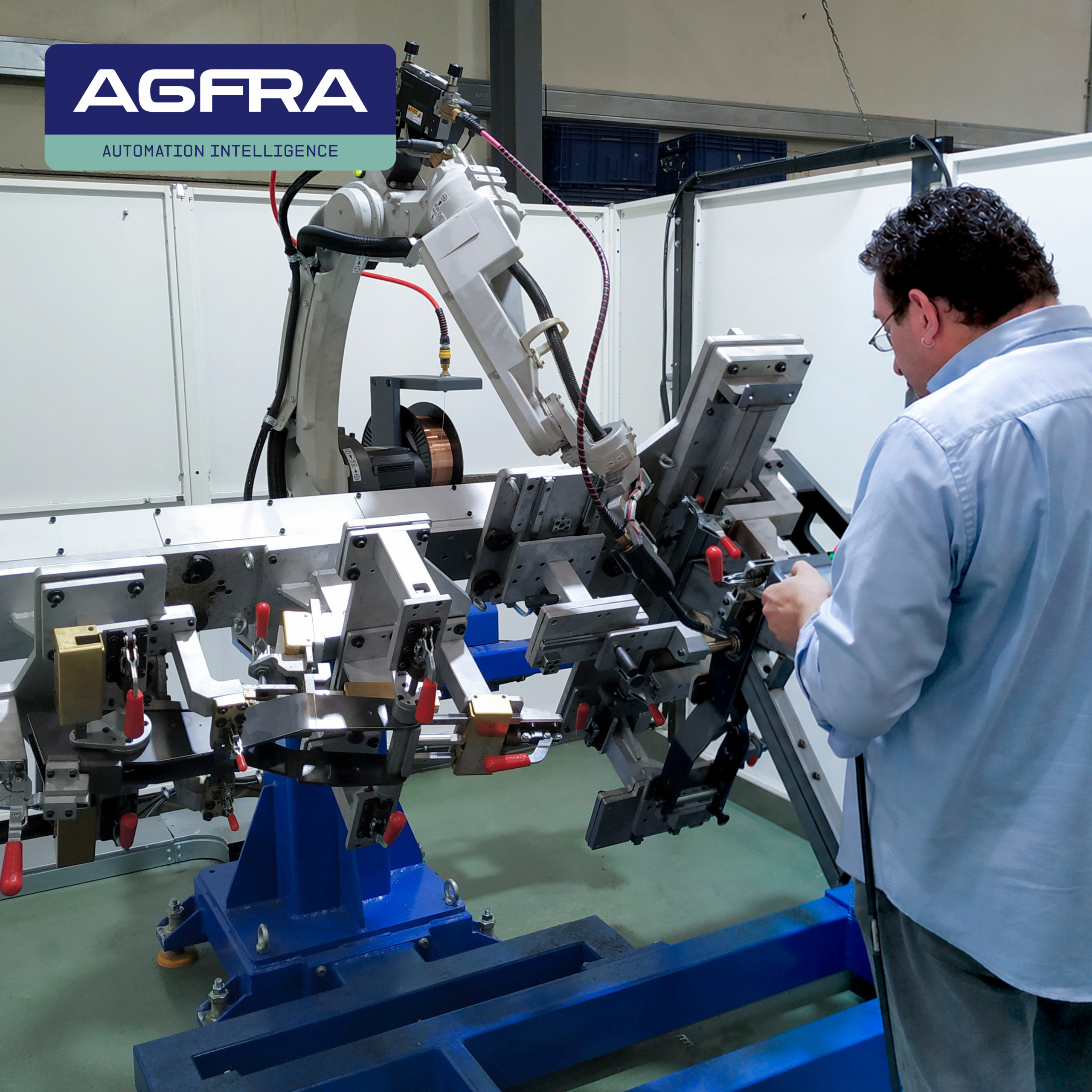
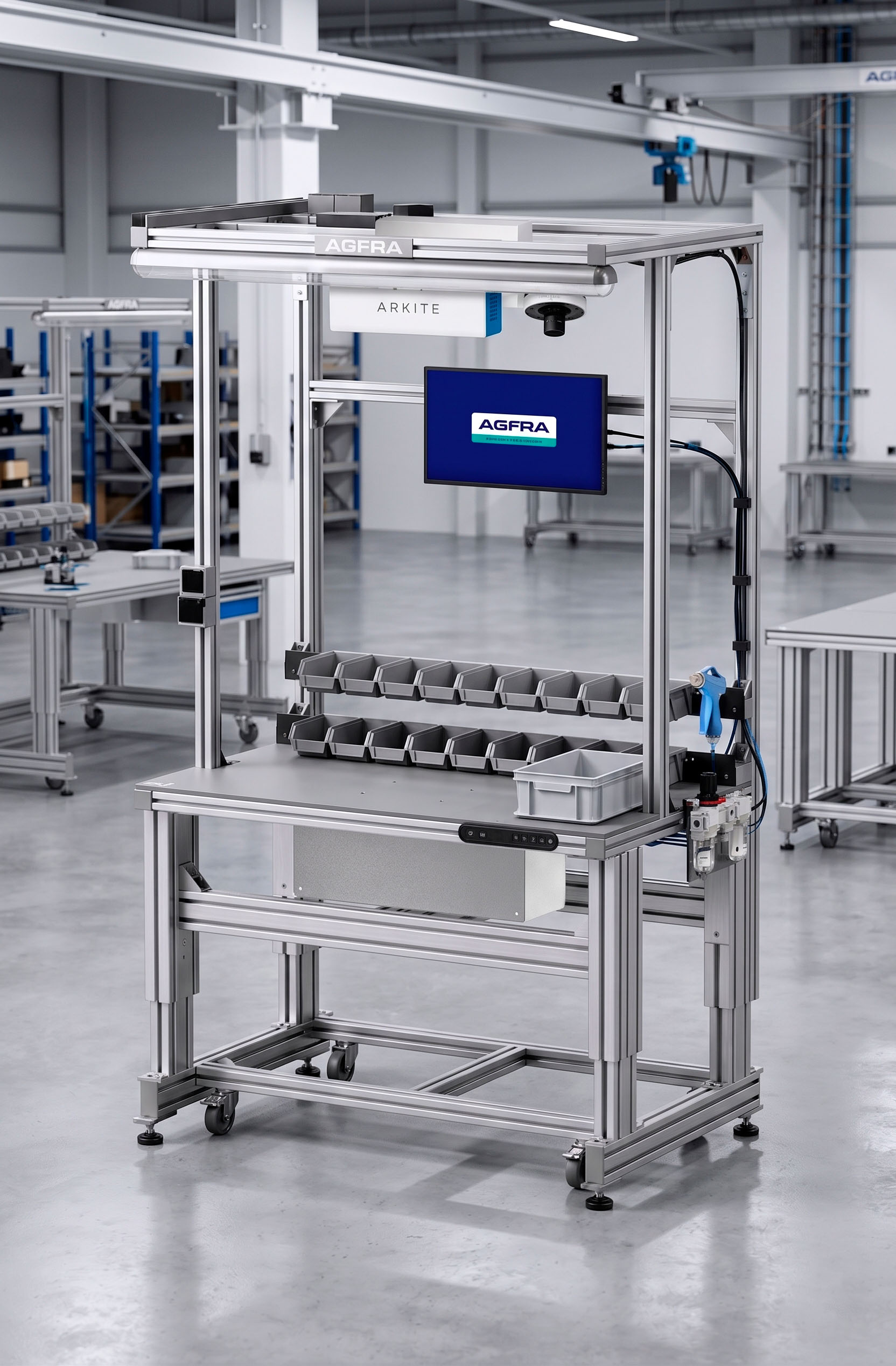
At AGFRA we design and manufacture the robotic cells that make this possible: dispensing systems with volumetric control, custom tooling that holds the geometry during cure, machine vision for bead inspection, and test benches that validate the finished joint.
We do not install standard equipment. We analyse the specific adhesive, the substrates and the cycle time of each process, and design the cell around them, because a bonding application that works with an epoxy on steel is not the same one that works with a polyurethane on a composite.
If you are introducing bonding into a process, or your current line is producing joints you cannot explain, we can look at it together.
Frequently asked questions
What are the main adhesives used in the automotive industry?
Structural epoxies, polyurethanes for glazing, methacrylates for fast cycles, silicones and MS polymers for sealing, hot melts for interiors, and anaerobic adhesives for thread locking and retaining components.
Is adhesive bonding stronger than welding?
It is not a question of being stronger, but of distributing load differently. A weld concentrates stress at a point, while a bonded joint spreads it across the whole bonded area, which improves fatigue and vibration behaviour. In many assemblies both are combined: weld bonding uses adhesive and spot welds together.
Can plastic be bonded to metal?
Yes, and that is one of the main reasons bonding has grown. It is the only practical way of joining dissimilar materials without melting them, and it prevents the galvanic corrosion that appears where aluminium meets steel.
How is a bonded joint inspected if it cannot be seen?
By controlling the process rather than the result: volumetric dosing, temperature control, vision inspection of the bead before closing the parts, unit traceability, and periodic destructive testing on production samples.