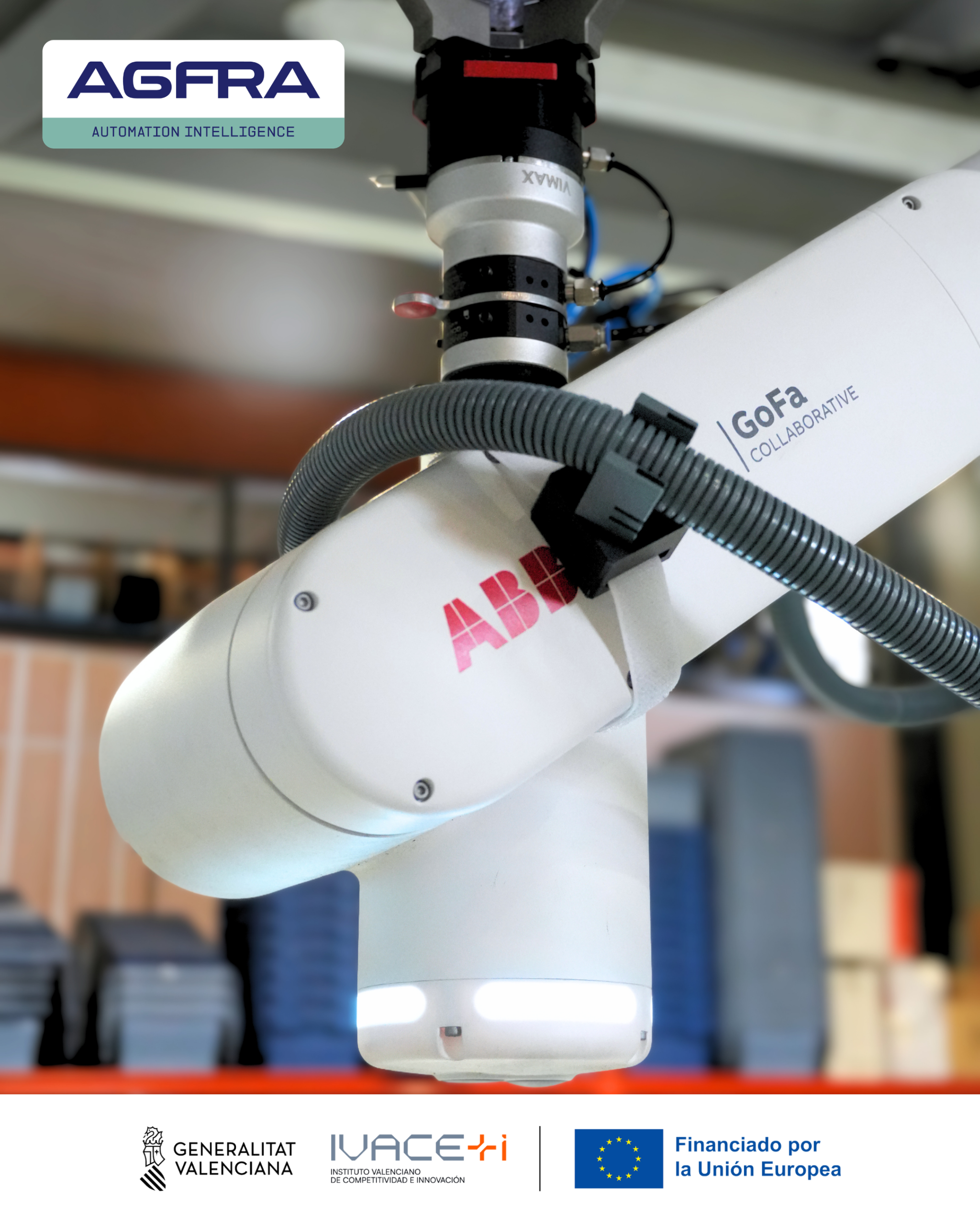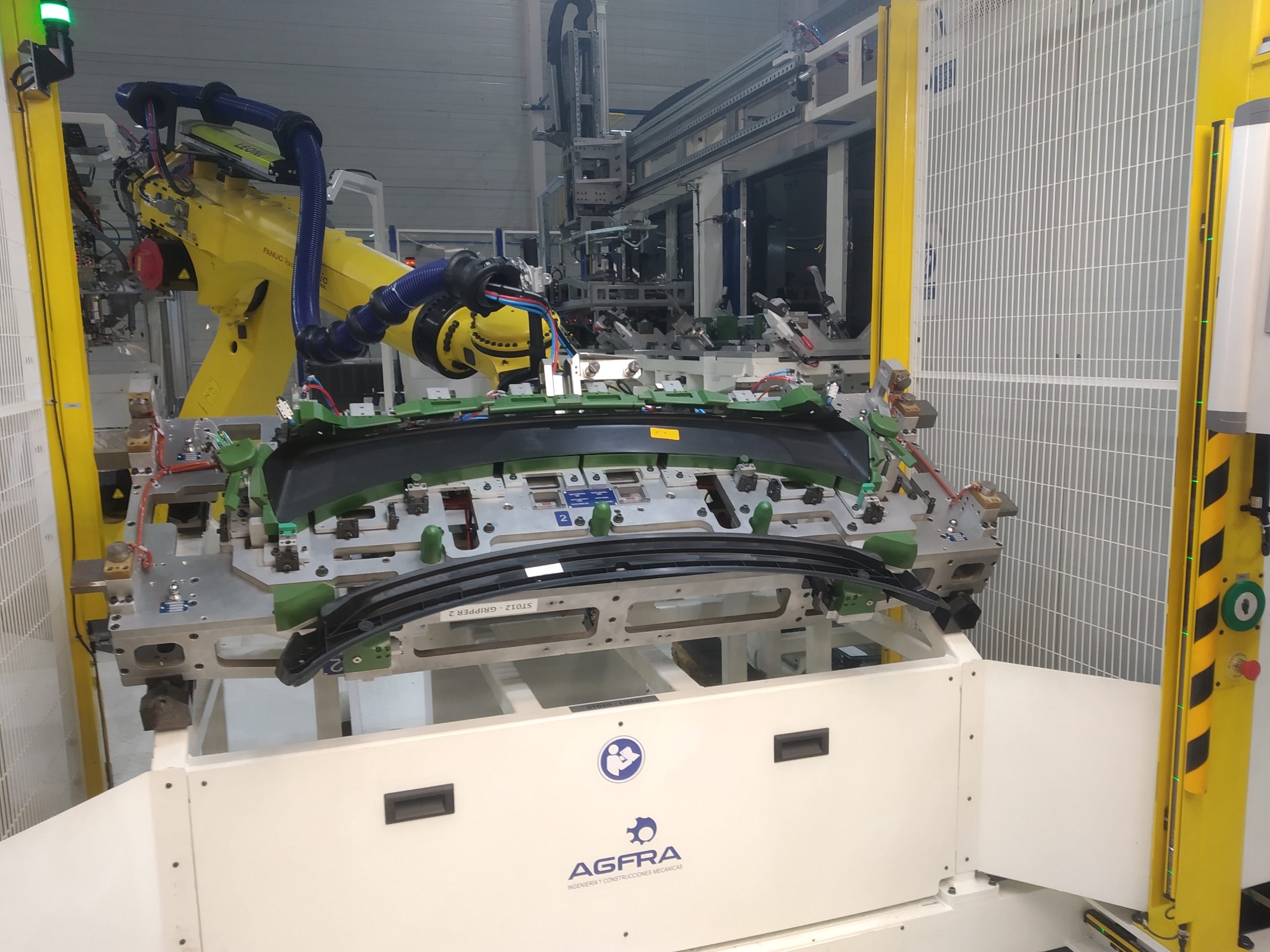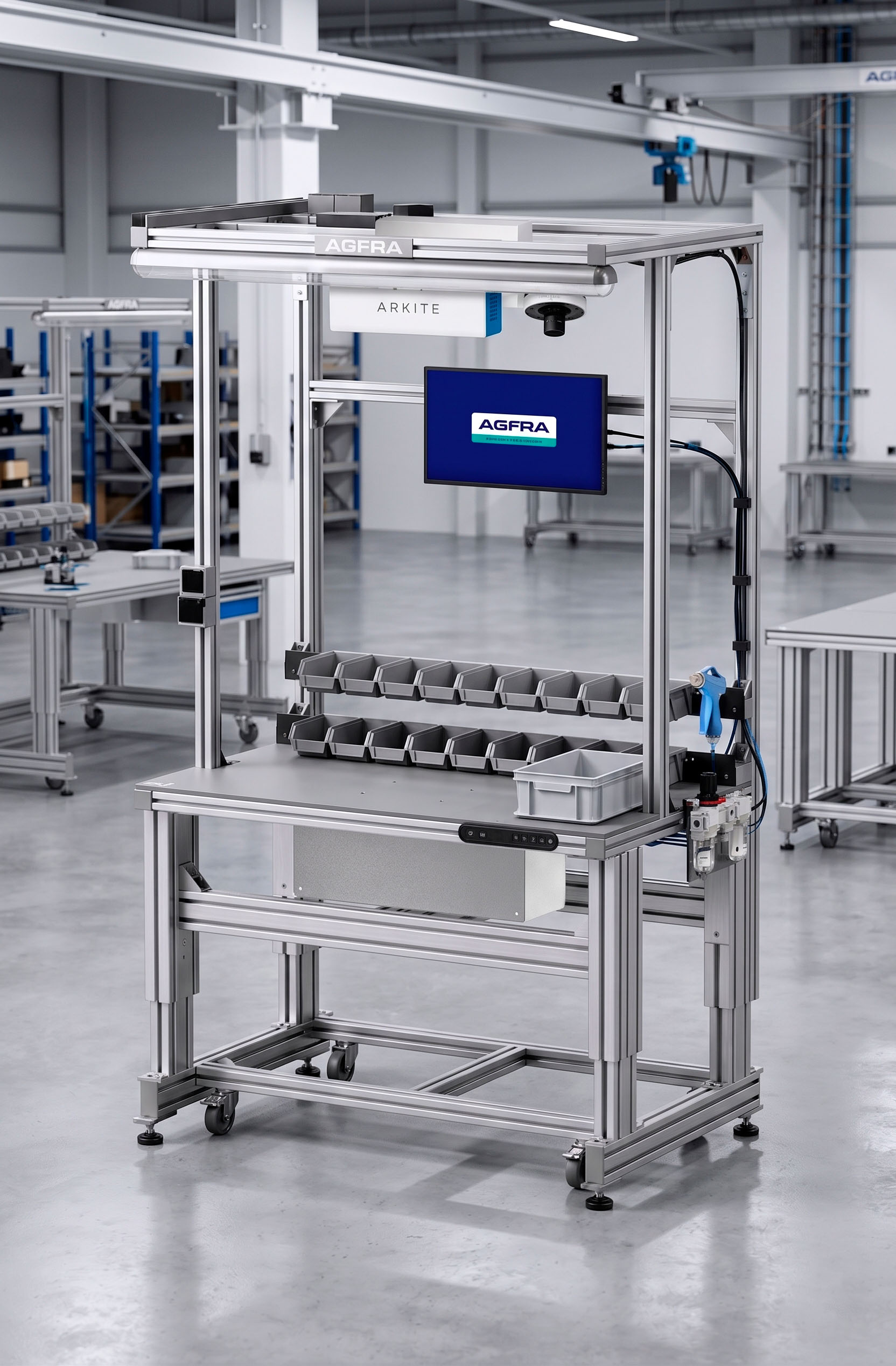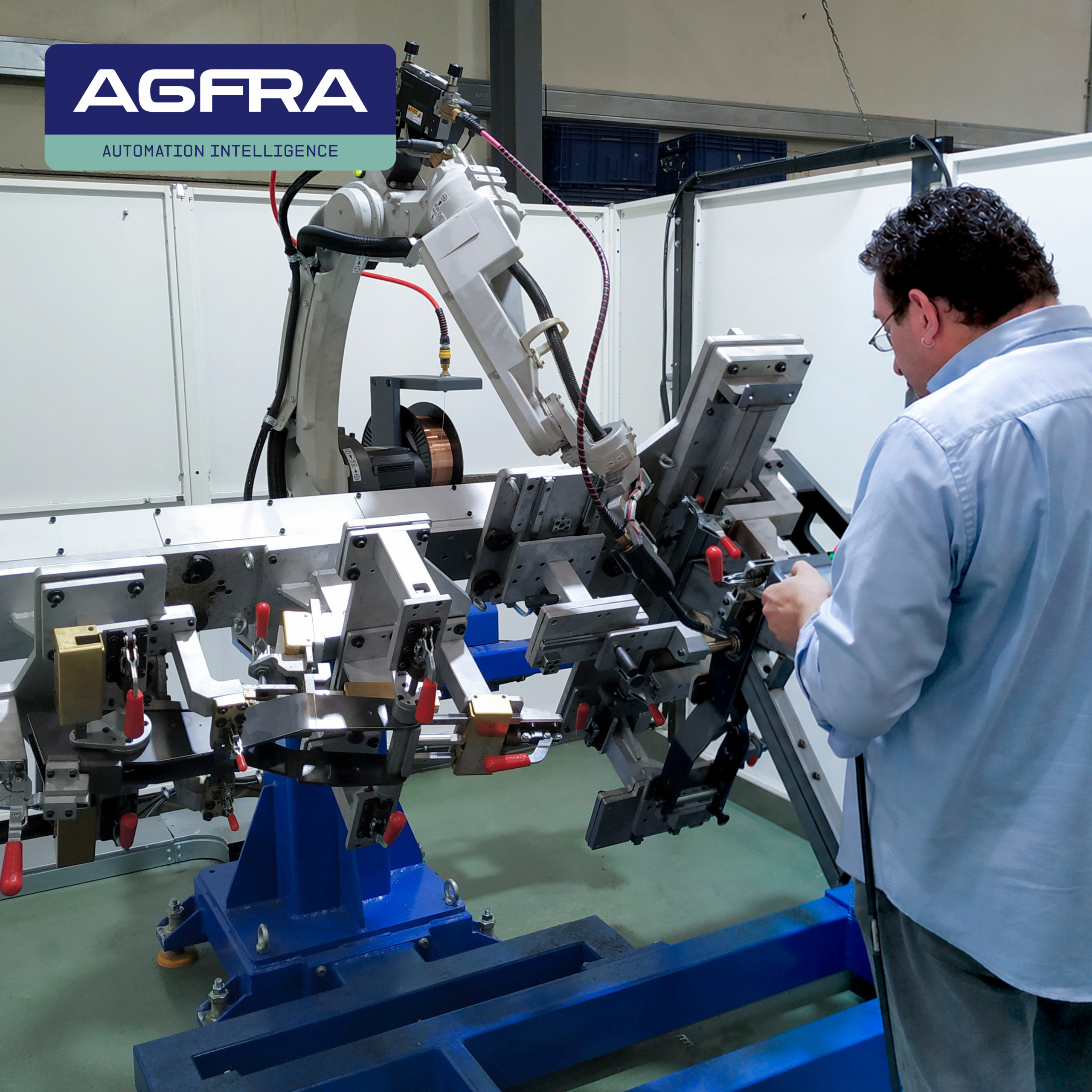
Robotic welding is a technique that uses industrial robots to join metal parts automatically, quickly and with repeatable precision. At AGFRA, we don’t write about it from the sidelines: our factory in Silla (Valencia, Spain) runs two in-house robotic welding cells that we use to manufacture welded fabrications in series. In this guide we explain what robotic welding is, how it works, when it pays off — and what we have learned from using it every day.
What is robotic welding?
Robotic welding is a welding method that uses robots to join metal materials. These robots are equipped with welding tools, such as welding torches and material feeding systems, and are programmed to carry out the welding process automatically and precisely.
Benefits of robotic welding
Robotic welding offers a number of significant benefits compared with conventional welding methods. Some of the key benefits are:
Increased efficiency and productivity
Robotic welding enables greater speed and efficiency in the welding process. Robots can work continuously without fatigue, resulting in higher output and shorter cycle times. This allows companies to increase their production capacity and meet delivery deadlines more effectively.
Improved quality and precision
Welding robots are designed to produce precise, consistent welds. Accurate programming and the robots’ repeatability guarantee constant quality in every weld. In addition, robots can be equipped with vision systems and sensors that detect imperfections and correct them automatically, reducing human error and improving weld quality.
Lower costs and shorter production times
Robotic welding can significantly reduce production costs. Automating the welding process reduces the need for manual labour, which means savings in labour costs. Robots also weld faster and more efficiently, which translates into shorter production times and lower associated costs.
Applications of robotic welding
Robotic welding is used across a wide range of industries thanks to its versatility and efficiency. Some of the most common applications include:
Automotive industry
The automotive industry is one of the biggest users of robotic welding. Robots are used to weld body components such as panels, chassis and structures. Robotic welding guarantees high precision and quality in every joint, contributing to vehicle safety and durability.
Metalworking industry
In the metalworking industry, robotic welding is used to manufacture metal structures, piping and tanks. Robots can weld high-strength materials and perform welds in hard-to-reach positions. This speeds up the manufacturing process and guarantees the structural integrity of the products.
Construction industry
In the construction sector, robotic welding is applied to the fabrication of structural components such as beams, columns and trusses. Robots can weld large volumes of structural elements precisely and efficiently, accelerating the construction process and improving joint quality.
Other sectors
Beyond the industries mentioned above, robotic welding is used in sectors such as aerospace, heavy machinery manufacturing and shipbuilding. In all these fields, robotic welding provides advantages in terms of speed, precision and weld quality.
Robotic welding at AGFRA: two in-house cells running in series production
At our facilities in Silla (Valencia, Spain) we operate two robotic welding cells dedicated to manufacturing welded fabrications in medium and large series. These cells allow us to weld carbon steel, aluminium alloys, stainless steel and titanium, using MIG/MAG processes as well as laser welding and cutting, and integrating leak testing and machine vision systems whenever the project requires it.
A real example: we series-manufacture welded components for the suspensions of competition 4×4 off-road vehicles — parts where a poor weld is not a quality incident, but a structural failure in the middle of a race.
In addition to manufacturing with our own cells, we design and build custom robotic welding cells for our clients: the welding tooling, the robot programming and the full simulation of the process before a single part is manufactured.
How robotic welding works
Robotic welding relies on the interaction of several elements to carry out the welding process automatically. Some of the key components are:
Welding robots and programming
Welding robots are designed with articulated arms that allow them to move precisely in different directions. They are equipped with welding torches and material feeding systems. Specific software is programmed to guide the robot’s movement and control welding parameters such as speed, current and torch position.
Sensors and vision systems
Welding robots can also be equipped with sensors and vision systems that allow them to detect and adapt to welding conditions in real time. These sensors can detect the position of the parts to be welded, the quality of the weld and the presence of imperfections. This feedback makes it possible to adjust welding parameters automatically and guarantee the quality of the joints.
Safety in robotic welding
Safety is a fundamental consideration in robotic welding. Physical barriers and safety systems are implemented to prevent any contact between robots and operators. Protective devices such as light curtains and proximity sensors are also used to guarantee a safe working environment.
Considerations before implementing robotic welding
Before implementing robotic welding, it is important to take several key aspects into account:
Feasibility analysis
A thorough analysis should be carried out to assess the feasibility of implementing robotic welding in a specific production process. This involves considering factors such as production volume, associated costs, weld complexity and available floor space.
Choosing equipment and suppliers
It is important to select the right equipment and suppliers for a robotic welding implementation. Aspects to consider include the quality and reliability of the robots, the availability of technical support and training, and the integrator’s experience in the field of robotic welding.
Staff training and adaptation
A successful robotic welding implementation requires staff training and adaptation. Operators and technicians must be trained to program and operate the welding robots. Safety and maintenance protocols must also be established to guarantee efficient, safe operation of the equipment.
The future of robotic welding
The future of robotic welding is promising. This technology is expected to keep evolving and improving in terms of precision, speed and adaptability. Implementation costs are also expected to fall, which will allow more companies — including small and medium-sized ones — to adopt robotic welding in their production processes.
In short, robotic welding offers significant benefits in terms of efficiency, quality and cost reduction across industry. Its ability to produce precise, consistent welds, together with automation and adaptability to welding conditions, makes it an attractive option for a wide range of applications.
Frequently asked questions (FAQs)
Will robotic welding completely replace human welders?
Robotic welding is not expected to completely replace human welders. While robots can perform welding tasks efficiently and precisely, human intervention is still required at several stages of the process, such as programming, maintenance and supervision. Human welders also play a crucial role in welding parts with complex shapes and sizes, as well as in troubleshooting and decision-making in unforeseen situations.
Is robotic welding safe in every working environment?
Robotic welding can be safe in most working environments provided that appropriate safety measures are implemented and established protocols are followed. Welding robots are equipped with sensors and safety systems to avoid collisions with people or objects. However, it is essential that operators and staff follow safety regulations, use personal protective equipment and are trained in the safe operation of robotic welding systems.
What skills are required to program welding robots?
Programming welding robots requires technical skills and specific knowledge. Each robot manufacturer uses its own programming language (such as RAPID for ABB or KRL for KUKA), so programmers need to master the environment of the brand they work with. They must also understand robot kinematics and control concepts, as well as welding parameters and the characteristics of the material being welded.
What is the initial cost of implementing robotic welding?
The initial cost of implementing robotic welding can vary depending on several factors, such as the size and complexity of the installation, the number of robots required and the auxiliary equipment needed. In addition to the cost of acquiring the robots and welding systems, you should also consider the costs of installation, staff training, robot programming and configuration, and maintenance. Although the initial investment can be significant, the long-term benefits — improved efficiency and lower operating costs — can offset these expenses.
Is robotic welding suitable for small and medium-sized companies?
Robotic welding can be suitable for small and medium-sized enterprises (SMEs) depending on several factors. Although it has traditionally been associated with large industries, implementation costs have fallen in recent years, making it more accessible. Before investing, it is advisable to carry out a feasibility analysis considering production volume, available space and staff training. A common alternative for SMEs is to outsource the robotic welding of their series components to a manufacturer that already operates its own cells, obtaining robotic-weld quality without taking on the investment.
Can I outsource the welding of my components to AGFRA, or order a custom cell?
Yes, both. We manufacture welded fabrications in series with our two in-house cells, and we also design and build custom robotic welding cells for integration into the client’s plant. In both cases, the starting point is a technical study of the part or the process. You can request one through our contact page.
Conclusion
Robotic welding is an advanced technique that offers numerous benefits in terms of efficiency, quality and cost reduction. Using programmed robots equipped with welding tools, this technology is applied in industries such as automotive, metalworking and construction.
At AGFRA we apply it every day: with our two robotic welding cells we series-manufacture welded fabrications in steel, aluminium, stainless steel and titanium, and we design custom cells for our clients. If you are considering robotising the welding of your components — whether by outsourcing manufacturing or implementing a cell in your own plant — tell us about your case and our engineering team will propose a technical study.